
Loneliness and Connection at Christmas: Using the Circle of Closeness
Why Connection Feels Different in December
The holiday season can amplify both joy and loneliness. For many Australians, Christmas highlights the contrast between the connections we long for and the reality of our relationships. The Circle of Closeness, a simple, reflective model introduced in our earlier post, helps us explore emotional safety and boundaries within our social world.
This article extends that framework to the festive season, integrating current research on loneliness, attachment, and neurobiological safety. It offers gentle, evidence-informed strategies to help you navigate connection, expectation, and emotional load over Christmas.
Why the Holidays Can Feel Tender and Tiring
While Christmas is often portrayed as joyful and connected, it can also bring emotional strain. Research shows around 15–17% of Australians experience loneliness, with peaks during December. The reasons are complicated:
Contrast effect: Seeing images of “perfect holidays” can intensify perceived disconnection.
Family roles: Old dynamics and unspoken expectations resurface.
Sensory and emotional overload: Noise, travel, and social obligations stretch nervous systems, particularly for neurodivergent people.
Grief and change: Absences and shifting relationships can resurface loss.
If this season feels heavy instead of festive, you’re not alone, and you’re not failing, you’re one of many people who are responding to a period that naturally stirs emotional complexity.
Understanding the Circle of Closeness at Christmas
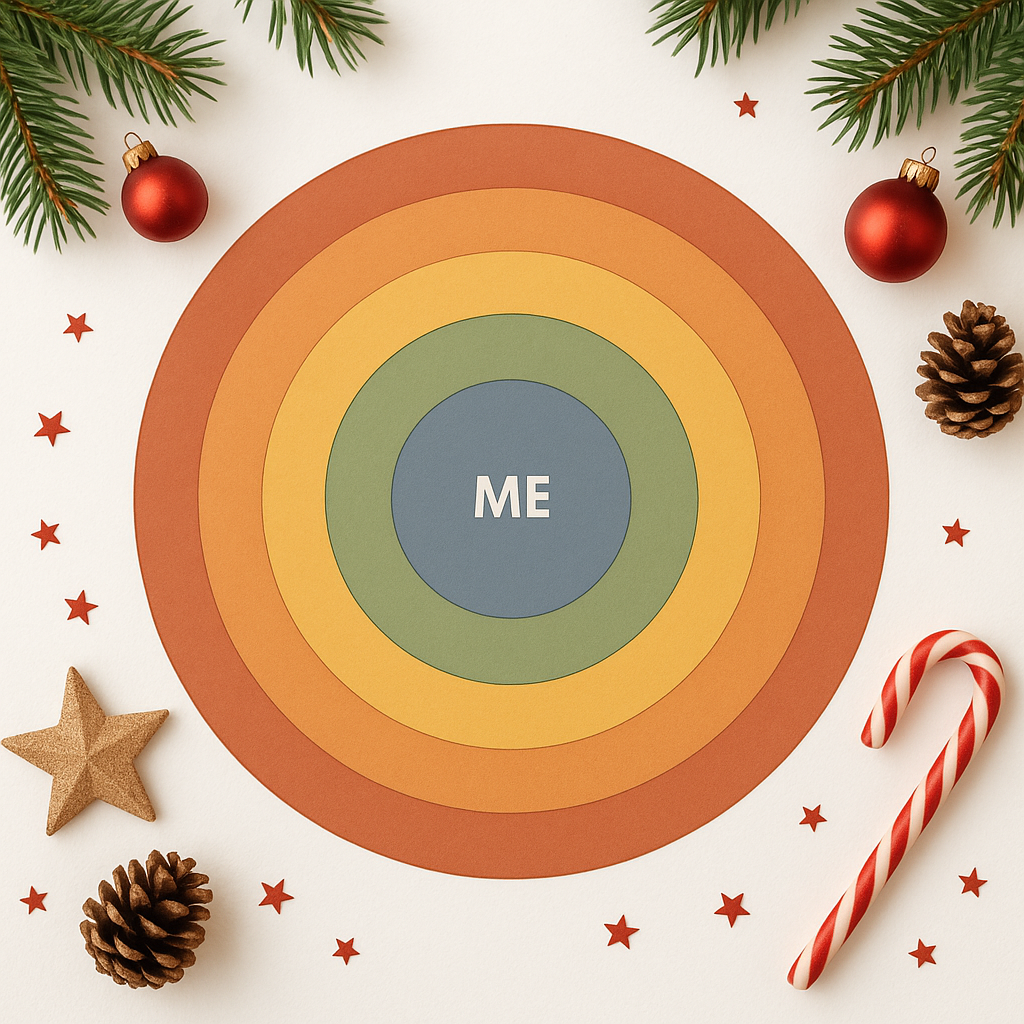
The Circle of Closeness invites us to map our relationships in a visual format, we can imagine them as concentric rings of emotional proximity. At the centre are the people who make us feel safe and authentic; further out are those where we might need more boundaries or emotional distance. These circles often shift, particularly during holidays. You might find yourself:
Spending time with extended family who are usually in the outer circles.
Missing people who can no longer be close.
It can be a time to reassess which relationships feel nourishing, and which deplete you. We might want to take some time to prioritise emotional safety over social obligation.
The Science of Connection and Loneliness
Attachment and Emotional Safety
Our early attachment experiences shape how we connect as adults. Challenges with attachment can trigger either overreaching for closeness or withdrawing to protect ourselves. These behaviours often resurface around family gatherings when we may be pulled back towards childhood patterns.
Polyvagal Theory and Social Safety
According to Dr Porges’ Polyvagal Theory, our nervous system constantly scans for cues of safety or danger. If we sense emotional threat, judgment, tension, or unpredictability, our body shifts into survival mode (fight, flight, freeze, or fawn). The overstimulating environments of the festive season can be a cue for these reactions. Preparing with grounding techniques, or time-out moments can help us bring the body back into a social and engaged state.
Interpersonal Neurobiology
Dr Dan Siegel’s research shows that being truly seen and understood activates neural pathways that promote regulation and resilience. Even brief moments of genuine connection, a kind text, shared humour, or eye contact with someone safe, release oxytocin and reduce feelings of stress.
Applying the Circle: Practical Steps for a Calmer Holiday
Map Your Circles
Draw a series of circles with yourself at the centre. Ask:
Who helps me feel calm and authentic?
Who drains my energy or means I need to mask?
Who might I gently bring closer, or move outward for now?
This isn’t about judging your relationships, it’s about planning your day to fit your emotional needs so you make it through.
Plan for Energy, Not Obligation
Think of connection as an energy budget.
Green (Restorative): People and settings that soothe you.
Amber (Tolerable): Short, structured contact.
Red (Depleting): Situations that feel unsafe or overstimulating.
Balancing these zones with time and energy can help prevent emotional burnout and let you meet the needs of the holidays and care for yourself at the same time.
Honour Boundaries as Care
Boundaries are acts of respect, for yourself and others. If you need to leave early, take breaks, or say “no,” you’re protecting your wellbeing, not rejecting connection. It can begin with:
“Today feels a bit much, can we take it slow?”
“Can we skip that topic this year?”
When Loneliness Feels Heavy
Loneliness isn’t a personal flaw; it’s a biological signal that we need meaningful connection. Chronic loneliness has been linked to increased stress responses, reduced immunity, and mood difficulties.
If your circle feels small right now, start with one safe connection, even a pet, a friend who listens without judgment. Micro-moments of attunement can make a profound difference.
Let Connection Be Gentle
Connection doesn’t have to be constant, loud, or performative. It can be:
Sitting quietly beside someone who makes your nervous system exhale.
Sharing a small moment of humour.
Allowing yourself to rest instead of people-please.
Whether your Circle of Closeness this holiday season includes many or few, may it hold at least one place where you feel safe, seen, and supported.
