
Time Blindness: Understanding How Time Can Slip, Stretch, or Disappear
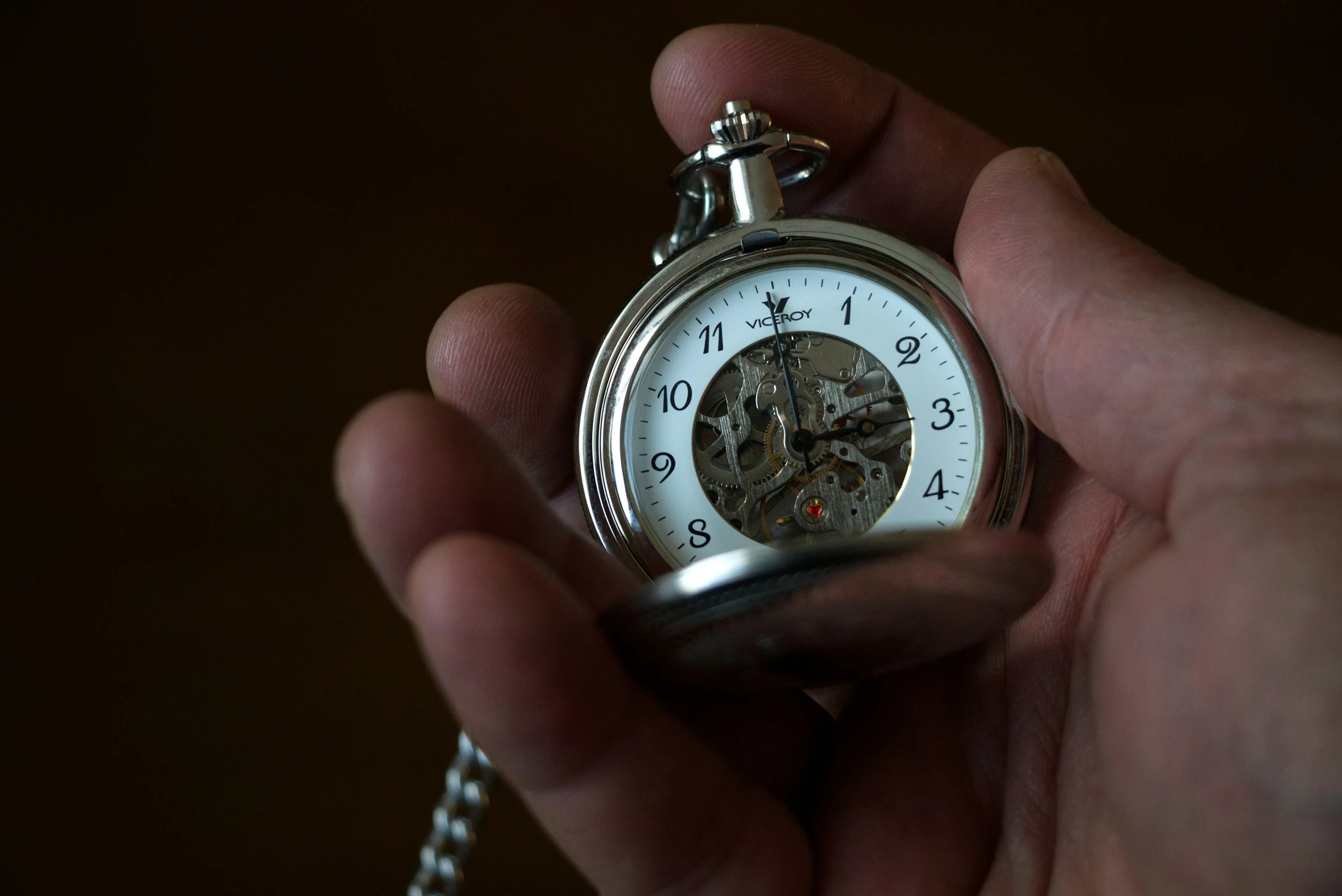
Many people describe feeling like time either slips away or stands still, mornings vanish, appointments arrive too soon, or tasks stretch endlessly. For some of us, especially those who are neurodivergent or living with stress or stress or trauma, this sense of “time blindness” can make everyday life harder to manage and easy to misinterpret as laziness, disorganisation, or failure.
There is no quick fix, instead there are some tools that can help you make sense of how your perception of time works, why it varies, and how to improve awareness and identify which external supports can help you orient rather than control time.
Time is a Construct (and a Temporal one)
If time were a straight line, planners would work perfectly, but for some of us, time behaves more like a mischievous cat. Sometimes it curls up and disappears for hours, other times it knocks everything off the table and demands attention right now. This is what people mean by time blindness: differences in how our brain senses, estimates, and tracks time. Instead of a steady flow, time can feel more like shifting weather. We might notice:
Not feeling how much time has passed
Under- or overestimating how long things will take
Difficulty starting, stopping, or switching tasks
Losing hours to focus, fatigue, or emotional overload
Forgetting future intentions unless something reminds you
Research links these patterns to differences in executive functioning and temporal processing, how the brain perceives duration, change, and sequence. In certain contexts, these same differences are also tied to strengths like creativity, deep immersion, and flexible thinking.
Why Time Can Feel So Slippery
Clocks and planners assume that once we know the time, we’ll automatically act on it, but for many people, knowing isn’t the same as feeling it. That gap is where frustration, and often shame, creeps in, especially when time struggles are mistaken for a lack of effort or care.
Neuroscience shows that our sense of time is shaped by attention, emotion, and motivation. When stress, fatigue, or emotional load increase, time can shrink to “right now” or stretch into something vague and unreal. This isn’t an excuse, it’s an explanation, and understanding what’s happening is the first step toward building tools that actually help. Here are a few of the processes involved:
Estimation: Guessing how long something will take (often wildly optimistically)
Monitoring: Checking time or progress (and forgetting to look)
Transitioning: Moving between activities (where time often goes missing)
Attention: Deep engagement that quietly eats entire afternoons
Arousal regulation: Stress or fatigue speeding time up or slowing it down
Understanding these systems helps separate difficulty with time from assumptions about motivation or discipline. The problem isn’t that we don’t care, it’s that time doesn’t always show up in a way our brain can easily read, and that’s something we can learn to work with.
Why Alarms Often Stop Working
A common assumption is that time difficulties come down to forgetting to set reminders or not paying enough attention to clocks. In practice, many of us already use multiple alarms and still find ourselves turning them off automatically, without fully registering them.
This is sometimes described as alarm fatigue. When cues are frequent, repetitive, or disconnected from clear action, our brain learns to filter them out. Eventually, the signal loses meaning.
What often helps more than “another alarm” is changing how time is signalled, so it is harder to ignore and easier to interpret. Our goal is not control, but communication: finding cues that your attention still notices.
Externalising Time
Because internal time-sensing can fluctuate, many people benefit from externalising time, bringing it into the environment so it can be seen, heard, or felt. Examples include:
Lighting cues: Lights that gradually brighten or change colour to mark the start or end of a routine.
Music or playlists: Setting a playlist that ends when it’s time to leave. A certain song can act as a gentle countdown from the transition from one task to the next. The option of adding rhythm in place of interruption creates a more gentle option over rigid alarms.
Visual countdown timers: Tools like a countdown Timer show time as a fading colour block or segment, this helps make time feel spatial rather than abstract.
Movement-based reminders: Devices like the “Clocky” alarm roll away. Combining sound, light, or movement can make time more noticeable without adding pressure.
Puzzle alarms: Require additional engagement to turn off the alarm adding in an additional step and the potential for a dopamine reward.
Colour Coded Day Plans: Segmenting your activities into blocks, this makes the day feel like a map, rather than a list of appointments.
Transition Buffers
Most schedules treat tasks like light switches: off, then instantly on, but switching tasks takes energy. Transition buffers are small pauses, sometimes just five minutes, giving our attention and nervous system time to shift gears, like a clutch between tasks, without one, the engine stalls.
Transitions often feel harder than expected not because of poor planning, but because shifting focus has a neurological cost. We can lose time in the space between finishing one thing and starting the next. It can help to experiment with:
A short “warm-up” before beginning a task
A brief wind-down or closing step before switching
Buffer time that flexes depending on focus, fatigue, or emotional load
These buffers don’t have to be rigid or formal, it can be playing a song before opening email, stretching, or taking a few breaths. The point isn’t productivity; it’s giving our brain a moment to transition from one space to the next. catch up. Time isn’t just about what we do, it’s also about how we move between things. When changeovers are treated as part of the task rather than an interruption, the day often feels calmer.
“Immediate” vs “Important”: Loud and Quiet Things
When you’re time blind, whatever shows up now tends to grab the microphone. An email pings, a thought pops up, someone asks a question, and suddenly it feels urgent, even if it isn’t actually important. Meanwhile, the quieter, longer-term things slip out the side door unnoticed. Time blindness can blur the line between:
What just appeared
What genuinely needs attention now
What can safely wait
This isn’t a failure of prioritisation; it’s an attention effect. Our brains are drawn to what’s loud, recent, or emotionally charged, especially when future tasks don’t have clear prompts to pull them back into view.
Many people find it helpful to externalise the difference between immediate and important, so the brain doesn’t have to juggle everything at once. For example:
“Now vs. Next” boards to separate what you’re doing from what’s coming later
Task cards or visual labels like urgent, important, or flexible
Apps or reminders that resurface tasks at the right time, not all the time
Shared planners for gentle accountability with another person
Capture lists to write things down and reassure your mind they won’t be lost
Not all priorities shout, some whisper. Building systems that help you hear the quiet ones again isn’t about perfect planning, it’s about lowering mental load, easing anxiety, and letting your attention work with time instead of chasing whatever just walked into the room.
Calibration and Awareness: Tuning Your Inner Clock
Time blindness isn’t about being bad at time, it’s about having an inner clock that’s a little out of tune. Gentle calibration can help, not to judge ourselves, but to notice patterns. A simple experiment:
Guess how long a familiar task will take.
Time it.
Compare guess and reality.
There are no grades or expectations, this is just about curiosity. Repeating this occasionally can slowly align felt time with clock time and reduce those “How is it already 3pm?” surprises.
Reflecting on Fit
Time awareness is part of how attention, emotion, and environment interact. It’s not a personal shortcoming or something to “fix.” You might notice moments when time feels steady, and others when it feels unpredictable, both are valid. Understanding your unique rhythm can help you shape surroundings that feel more workable.
There’s no pressure to act on this now, simply noticing your relationship with time is already meaningful.
