
Scared but Safe: The Psychology of Fear, Feeling Safe and Finding Your Brave
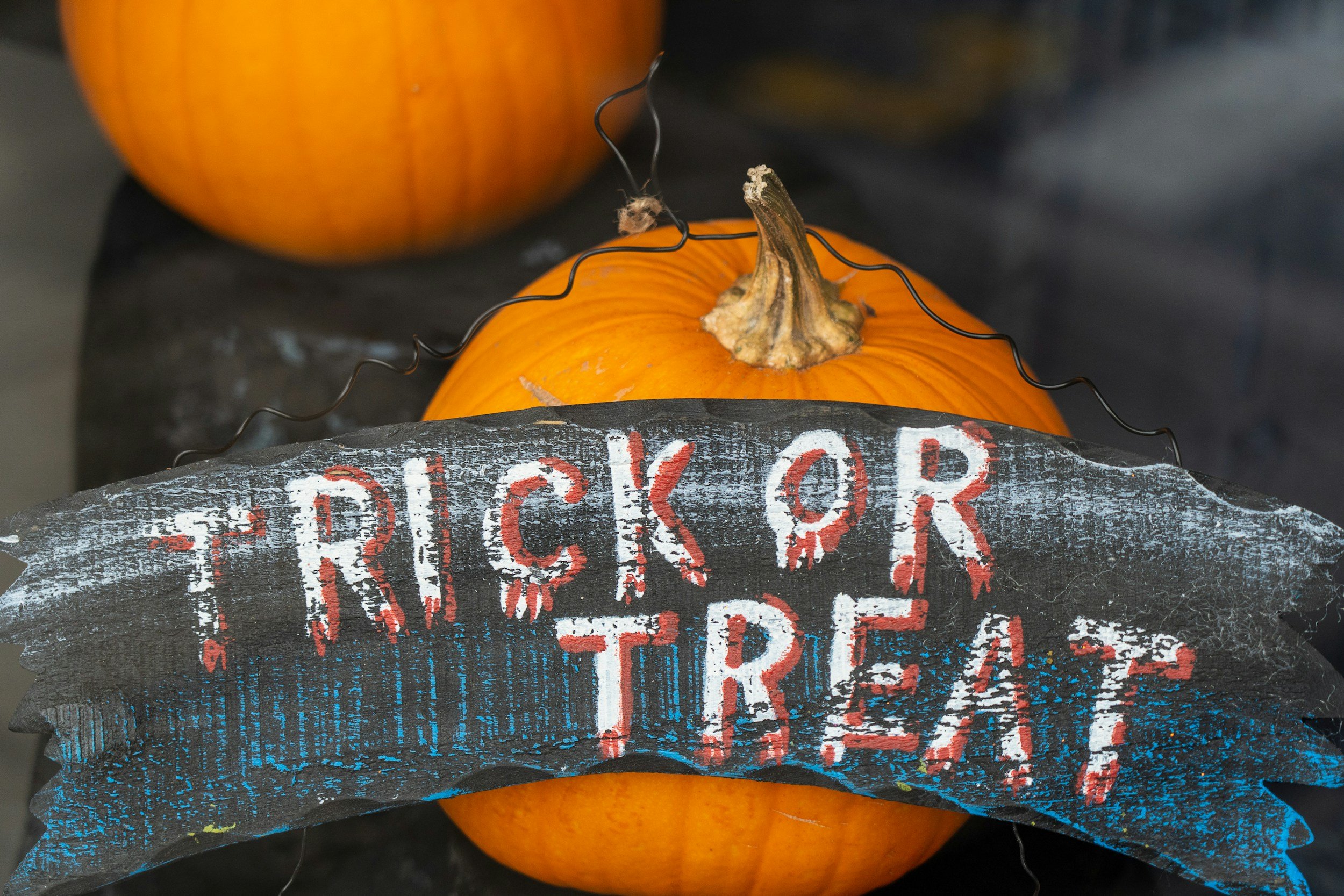
It's Friday night, you're curled up on the couch with a blanket, snacks and watching a horror movie. The music turns ominous; someone on screen hears a suspicious noise and decides to investigate the basement. They’re alone, (because apparently turning on the lights and calling for help would ruin the plot). Your heart races, your muscles tense and you're practically shouting,
"Don't go down there!"
You're having a wonderful time, meanwhile, your partner has disappeared behind a cushion, questioning why anyone would voluntarily spend two hours feeling terrified.
We watch horror films, binge true crime podcasts and pay good money to be chased through haunted houses by someone with a (hopefully) fake chainsaw.
So why do we seek out fear when feeling safe is such a fundamental human need? The answer reveals a lot about how our minds work and offers some useful lessons for everyday anxiety and relationships.
Fear Isn’t Always the Enemy: The Smoke Alarm
Think of your brain's threat-detection system as a smoke alarm. Its job is to keep you safe. Unfortunately, it isn't always brilliant at telling the difference between a house fire and burnt toast.
Imagine one of our ancestors walking through long grass and spotting something curled up on the ground. If they assumed it was a snake and leapt backwards, the worst outcome was looking silly over a piece of vine. However, if they assumed it was a vine and it turned out to be a snake, they were less likely to become someone's ancestor. Evolutionary psychologists call this the smoke detector principle, because a false alarm costs far less than a missed threat, in other words, we're descended from the jumpy ones. When our alarm sounds, our body prepares for action before the thinking part of our brain has fully caught up. Our heart races, our muscles tense and our attention narrows towards possible danger.
What was a survival strategy in long grass can mean we see snakes in modern life and can make it difficult to find a rope (or the garden hose). An email titled "Can we talk?", an unexpected noise at night or a long pause before a friend replies to a text can trigger the same ancient response, even though none of them is likely to bite.
It's very helpful when a magpie is swooping, but less helpful when we're lying awake at 2 am replaying an awkward work conversation from 2017.
When Fear Becomes Fun: The Science of Recreational Fear
We sometimes call this “recreational fear”: voluntarily choosing frightening experiences for enjoyment.
In one study, researchers tracked the heart rates of 110 haunted-house visitors. Enjoyment followed an inverted-U pattern, too little fear was boring, too much was overwhelming, and the most fun sat somewhere in the middle, think of it something like Goldilocks, but with zombies.
People also manage that sweet spot differently. Some visitors were "adrenaline junkies" or “stimulus seekers” who turned the fear up, while others were "white-knucklers" who used strategies to turn it down, such as looking away or reminding themselves it wasn't real. Several other factors help explain the appeal:
Curiosity. We are naturally curious about danger, even dangers we'd never want to face ourselves. We can think about this morbid curiosity. It may help explain the popularity of true crime, although real tragedies involve real people and deserve sensitivity.
A manageable challenge. We sometimes enjoy unpleasant sensations when we know we're safe. This is known as benign masochism, compare this to the sensation of something like chilli, icy ocean swims or a gym class that makes stairs your enemy for days.
Control. You can pause the movie, cover your eyes or leave the haunted house.
Interestingly, horror fans often report greater psychological resilience during the early COVID-19 pandemic. However, we need to remember the difference between association rather than causation. It doesn't mean horror builds resilience, or that people who people who avoid horror are less brave.
Same Body, Different Story
Why does one person laugh through a horror film while another hides behind a cushion? Our bodies may react in similar ways, but our interpretation, temperament, current stress, sensory sensitivities and past experiences all shape what feels manageable. Uncertainty can be particularly hard to tolerate when we don't know what will happen or how we'll cope.
This can include someone with a trauma history, where a frightening scene might bring up distressing memories rather than harmless suspense, different triggers for different people. Neither reaction measures courage or psychological health. Often it’s about being aware of your own limitations and sometimes the wisest choice is switching off the horror movie and watching Bluey instead.
What Halloween Can Teach Us About Anxiety
Anxiety often works like a horror trailer, it shows us the scariest possible scenes and leaves out the boring part where everything turns out fine.
Imagine being invited to a Halloween party, our mind can predict awkward conversations, an embarrassing costume and an evening making small talk beside the cheese platter. We might choose to stay home. The relief of that choice can feel immediate, but we never get to find out whether our predictions were accurate. Over time, avoidance can keep anxiety going and quietly shrink our world.
The goal isn't to eliminate fear or ignore genuine danger, it's to let fear ride in the car without handing it the steering wheel.
When Fear Brings Us Closer
Remember our partner hiding behind the cushion? That moment reveals a lot about emotional safety.
The horror-loving partner might say,
"Relax, it's not real!"
They're technically right about the movie, but it doesn't make the other person’s fear imaginary. Compare that with:
"This is really getting to you, isn't it? Want to watch something else?"
The second response doesn't require us to feel scared; it only requires noticing what our partner is experiencing. This reflects one of the most valuable skills in any relationship: acknowledging another person's emotional experience without necessarily sharing it.
We don't have to feel the cold to pass someone a jumper.
This is about “validation”. We’re communicating the other person that their feelings make sense, even if we might feel something different. Validation isn't agreement, and it isn't pretending to feel the same way. Attachment-informed research suggests that reliable responsiveness, rather than matching emotions, is what builds trust and closeness over time.
The same principle applies well beyond movie nights. One partner might find a heated discussion energising, while the other finds it overwhelming. Instead of debating whose reaction is "reasonable," try talk about our needs. Handled this way, fear can bring a couple closer, much like grabbing each other's hand during the scariest scene.
From Fright to Insight: Ways to Handle Fear Helpfully
Check your fear traffic light.
Notice where you are right now:
Green means you feel calm and can think clearly.
Amber means you're uncomfortable but can still make choices.
Red means you feel overwhelmed or frozen and find it hard to connect socially.
In amber, you might gently stay with a manageable challenge. In red, you focus on trying to calm your body down before making any big decisions, however this works for your, breathing or physical strategies. Growth tends to happen in the “amber” zone it’s about recognising where you are what you are a capable of in each area.
Be a detective, not a disaster-movie director.
Anxiety writes dramatic plot twists, before you accept the script, ask yourself:
What am I predicting is going to happen?
What's the evidence for and against it?
What else could explain why I’m think this way?
Is there a real danger that needs action?
The aim is balance, not forced positivity.
Take small, brave steps.
Avoidance is anxiety's favourite snack. Choose something mildly uncomfortable but safe, like making a phone call, asking a question or sharing a preference. Write down what you think or predict will happen, then compare it with what actually happened. Start small and go at your own pace.
Give your nervous system a pit stop.
In a heated conversation, try saying: "I want to sort this out, but I'm getting overwhelmed. Can we take 20 minutes and come back to it?"
Pausing isn't abandoning the issue, as long as you are planning a time and space to return to it.
Check your fear menu.
After a horror film or true crime podcast, notice how you feel. If you're entertained and sleeping well, great. If you're investigating every creak in the hallway like an unpaid forensic consultant, try moving the podcast away from bedtime.
Consider it like coffee (if it’s affecting your sleep, maybe it’s best left for before 2pm).
Talk about the fear underneath the frustration.
In relationships, our protective reactions can disguise what we're actually feeling. Try to limit your assumptions and ask questions rather than making statements. Try:
“When I feel unheard, I start worrying that what matters to me isn't important to you. Could we talk about it?”
You can also ask each other:
“When you're stressed, what helps most: reassurance, practical support, some space or simply being listened to?”
Different people need different things. Emotional safety grows through mutual respect, clear boundaries and responsiveness, not mind-reading.
The Final Fright
Fear isn't always the villain, it's more like an overenthusiastic bodyguard, trying to protect us but occasionally tackling the wrong person. Courage isn't measured by how much fear we can tolerate. Sometimes it's about trying something new or asking for support. Other times, it's about setting a boundary or walking away, and if your next act of bravery this October is refusing to watch another film about a possessed Victorian doll? That's a perfectly reasonable choice.
