
Eyeballs, Brains and the "Ick": What Disgust Is Trying to Tell You This Halloween
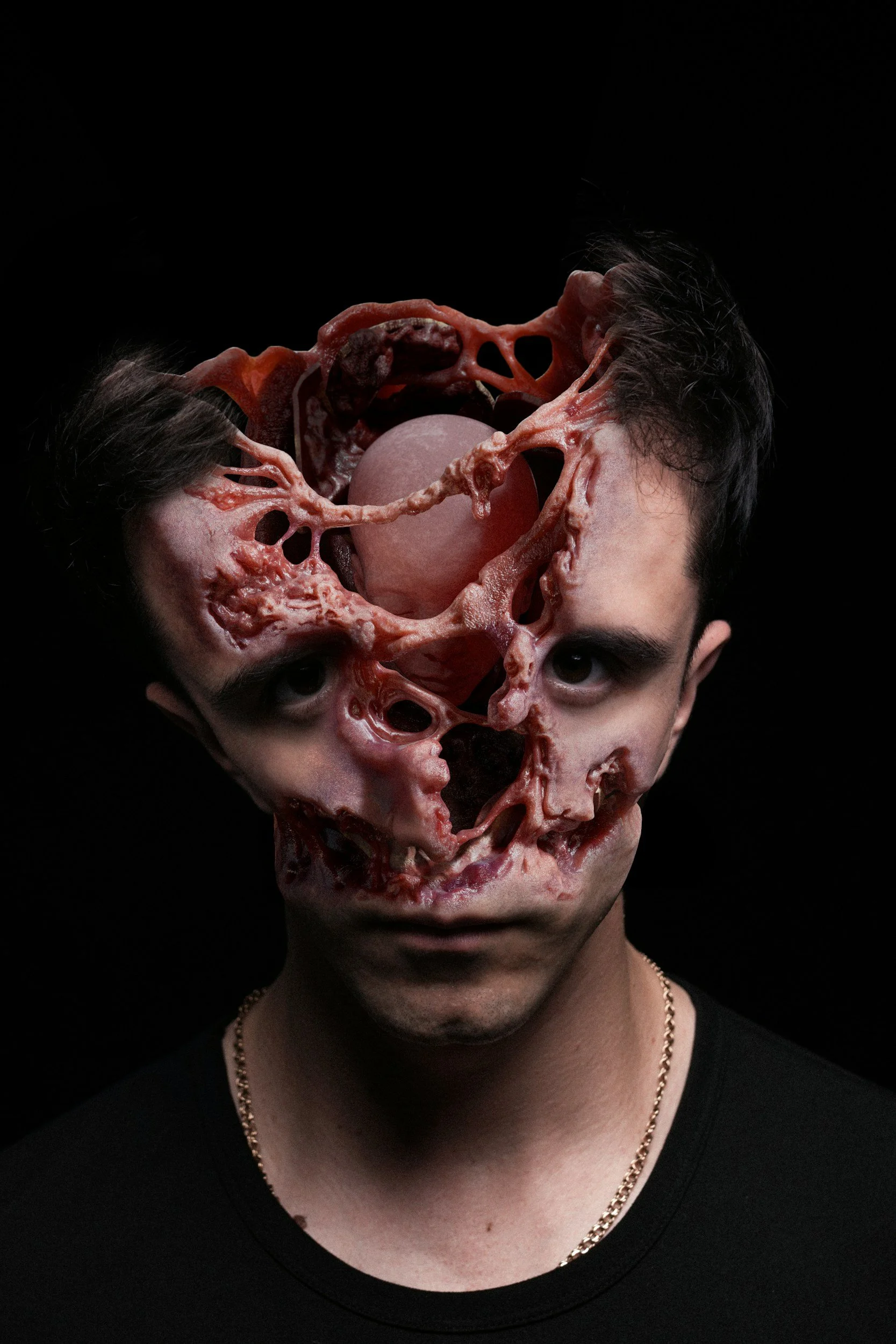
It's Halloween, you’re blindfolded at a party, and someone guides your hand into a bowl. They whisper the word "eyeballs," quietly into your ear as your fingers sink into something cold, slippery and squishy, and you yank your hand back so fast you nearly elbow them in the chest. In reality it was peeled grapes, and you knew they were peeled grapes; you may have even watched someone peel them, but a part of you still reacted.
It’s the emotion of disgust. One of our core, least negotiable emotions, it’s also one of the least discussed. There's endless advice about how we can manage anxiety, but disgust rarely gets a mention. Understanding how it works can help us tell when it's providing protection and when it's making a scene.
Meet Your Internal Health Inspector
Think of disgust as a health inspector living in our brain. Its job is to spot anything that might make us sick and get away from it, fast.
Researchers describe disgust as part of our behavioural immune system. This is a set of automatic responses that help us avoid infection before our actual immune system has to step in. The signs can be easily recognisable: a wrinkled nose, a curled upper lip, a lurching stomach and a strong urge to pull away.
Fear and disgust often turn up together, but they have different tasks:
Fear says: "That might hurt me."
Disgust says: "That might contaminate me. Get it away!"
The challenge is that our inspector judges appearances, rather than using lab results. It’s why sometimes we talk about eating a meal with our eyes. In a classic study from the 1980’s, many people refused to drink juice after a fully sterilised cockroach had been dipped in it. Scientifically the dink was safe, but our internal detector wasn't convinced.
It’s why peeled grapes can feel like eyeballs and cold spaghetti can feel like brains and why a Halloween party can make our stomach turn even though nothing there is actually dangerous.
Why Do We Pay to Be Grossed Out?
If disgust exists to keep us away from yucky things, why do so many of us happily queue for haunted houses, zombie films and jelly "brains"?
Some psychologist refer to this as benign masochism, it means enjoying an unpleasant feeling when we know we're safe. It's the same reason people love chillies that make their eyes water and rollercoasters that make their stomach drop. Our body sounds the alarm, while our brain says "Relax, it's pretend," it's oddly satisfying to feel the reaction while staying in control.
Halloween is a safety drill for the inspector, the alarms go off, just to know the system is working.
The Inspector Has More Than One Department
Disgust isn't only about germs; researchers describe three main areas:
Pathogen disgust: Spoiled food, bodily fluids and anything that looks like it could carry illness.
Sexual disgust: Discomfort with certain sexual situations or contact, shaped by our personal boundaries, culture and experience.
Moral disgust: Revulsion at cruelty, betrayal or unfairness, the feeling of "That’s wrong."
There's also a related experience of self-disgust; when our judgement turns inward and targets our own body, thoughts, behaviour or past experiences.
It’s important to recognise that everyone varies. Some people feel disgust more easily (disgust propensity). Some people find the feeling more distressing when it shows up (disgust sensitivity). Subtle differences in how our inspector is set up and assesses the risk.
Why "Just Get Over It" Rarely Works
Have you ever known something was completely safe but still found it revolting? Research suggests disgust is a "sticky" emotion. Once we've learned to find something disgusting, that response can be slower to fade than fear, even after we know it's harmless.
We can know the grapes are grapes and still not want to touch them. Logic sits in one office and the health inspector sits in another, and they don't always share notes. It’s one of the reasons why lectures from friends like "It's fine, just eat it!" rarely help, but sticky doesn't mean permanent. With patience and repeated safe experiences, the inspector can update its records.
When the Inspector Gets Overzealous
Sometimes disgust is needed, it helps us bin mouldy food, notice when someone crosses a boundary and recognise behaviour that clashes with our values. At other times, those signals can shut down safe places. Disgust that is intense, persistent or turned inward can play a role in:
Contamination fears, such as excessive washing or avoidance. These are sometimes linked with obsessive-compulsive disorder (OCD).
Self-disgust, which can occur alongside depression, eating concerns or trauma-related distress.
Relationship strain, when disgust about a behaviour can shift into contempt for the person.
Everyday avoidance, such as skipping medical appointments, intimacy, foods or avoiding locations associated with past trauma despite little real risk.
Strong disgust on its own isn't a diagnosis, what matters is whether the reaction fits the situation and how much it limits our lives.
Ways to Work With Disgust Instead of Fighting It
Disgust is a useful emotion, but sometimes our internal health inspector gets a little carried away. The aim isn't to switch off the alarm, but to recognise when disgust is protecting us, when it's responding to something harmless, and how to choose a response that supports our wellbeing.
Halloween makes a surprisingly good practice ground. Everyone is pretending so the stakes can be relatively low and we're allowed to laugh. Try whichever of these strategies fits you best.
Find the department
When disgust shows up, get specific.
Is this about germs, a crossed boundary, a clash with your values, or something aimed at yourself?
Check whether it's disgust or fear.
Fear says "this might hurt me," while disgust says "this might contaminate me.
While they often arrive together, they respond differently.
Research suggests that people who can tell their uncomfortable feelings apart more precisely tend to cope with more flexibly
Experiencing a vague sensation of "I feel awful" is like a fire alarm with no floor number. While moral disgust can tell us where to look.
Check for "sympathetic magic"
Your inspector uses two old shortcuts:
Contagion: "Once it's touched something gross, it's contaminated forever." This is the sterilised cockroach in the juice.
Similarity: "If it looks like something gross, it is something gross."
In research, people avoided fudge shaped like dog faeces.
If we can ask ourselves: "Is this contaminated, or did it touch, or look like, something unpleasant?"
If there's a health risk, or a boundary or value is involved, we need to take our reaction seriously.
If it feels like magic, we can let the inspector grumble without letting it decide for you.
Describe it like a lab technician
In a well-known study, people watched a disgusting film. Those who viewed it with a detached, technical eye reported feeling less disgust.
Those who kept a poker face felt just as disgusted and showed more physical stress.
Instead of forcing ourselves to keep a straight face, it can help to change the description. If we describe The "eyeball" as "a cool, round, slightly slippery fruit about two centimetres across." We're not denying what we feeling, we're giving internal inspector a more accurate report of what we experiencing.
Climb the senses ladder
Disgust comes in through the senses, so if we can face it gradually, one sense at a time it can be easier.
We want to look at the bowl of "brains," smell it, touch it with a fingertip, then hold a handful.
Halloween props make an ideal fire drill: They give us a chance for the alarm to go off, but feel that nothing burns.
Because disgust is sticky, it may not fade much at first.
We want to measure success by "I did it and I coped," rather than say "it's not gross anymore."
It’s important to recognise that if our avoidance is linked to OCD, trauma or eating concerns, do this work with appropriate support rather than trying thins alone.
Calibrate your settings, don't condemn the person
People have different disgust settings. One partner's "slightly used" towel is the other's biohazard.
Relationship research has found that contempt is costly, and it has been identified as one of the strongest predictors of relationship breakdown. Compare these two responses:
"You're disgusting."
"We seem to have different settings on what counts as clean. Can we agree on a standard for the bench we can both live with?"
The first one puts our partner on trial, while the second lets us negotiates a shared standard, ideally before the dishes develop their own ecosystem.
Meet self-disgust with self-compassion
When disgust turns inward, harsh self-criticism tends to make it stickier.
If we can try asking: "What would I say to a close friend who felt this way about themselves?" Then say those words to ourselves.
Often this will feel awkward at first.
Self-compassion has been linked with lower shame and better wellbeing, but compassion-focused approaches are designed specifically for shame and self-criticism.
If self-disgust is intense or connected to painful experiences, reaching out for support and acceptance can be one of the most important steps.
Compare your ick settings
Everyone's inspector comes with different factory settings.
If one partner happily shares a drink bottle, while the other considers it a biohazard.
It can help to compare together. Each of you privately rates a few everyday things from 0 to 10 on the ick scale:
shared toothpaste, the dog on the bed, a bath towel on day four, double-dipping at the barbie.
Then compare your answers. Usually the gap turns out to be about settings, not character.
Recognising that you’re just calibrated differently" can be negotiated, while thinking "You're disgusting" can be harder to manage.
Shift from how it looks to what it does
When disgust turns inward, it often targets how we look.
Body image research suggests it can help to shift your attention to what your body does.
Try to write down three things your body did for you today.
Maybe it carried the shopping, hugged someone you love or digested an alarming quantity of Halloween lollies.
Write it as a thank-you note, not a performance review.
Again these tasks can feel awkward at first, and if self-disgust is intense or constant, or they’re linked to painful experiences, these can be warning signals to reach out for support.
Pair the gross with the good
Sitting with something icky can be slow to change how you feel about it.
Research suggests disgust may shift more when the trigger is repeatedly paired with something pleasant. This is called counterconditioning.
Halloween is made for it.
Eat the "eyeballs" while laughing with friends, squish the slime while your favourite song plays, or hand out jelly worms to delighted kids.
Aim for "I did it and enjoyed parts of it," rather than trying for "it's not gross anymore."
Our Feelings Are Messengers, Not Instructions
This Halloween, when your hand closes around a cold, slippery "eyeball," give your inner health inspector some credit, it's been protecting us for a very long time. Disgust can influence how we see our bodies, interpret other people's behaviour, approach intimacy and respond to uncomfortable thoughts or memories, but feeling something strongly doesn't necessarily make it true. Instead, the skill is learning to pause and ask:
What's triggering this reaction? Is it a genuine risk, a personal boundary, a past experience or a learned association?
Does the feeling fit the facts? Am I responding to what's happening now or what my brain predicts might happen?
What's the most helpful next step? Do I need to protect myself, communicate a concern or practise tolerating safe discomfort?
We don't have to enjoy everything that makes us uncomfortable, and we’re not required to override our boundaries to prove we can manage disgust.
We can acknowledge the feeling without following its instructions.
Our brain's hygiene inspector is trying to help, but that doesn’t mean it needs to be promoted to CEO, and that mysterious, furry container at the back of the fridge? Some things belong in the bin.
