
Dopamine, Motivation, and ADHD: Understanding Drive, Focus, and Effort
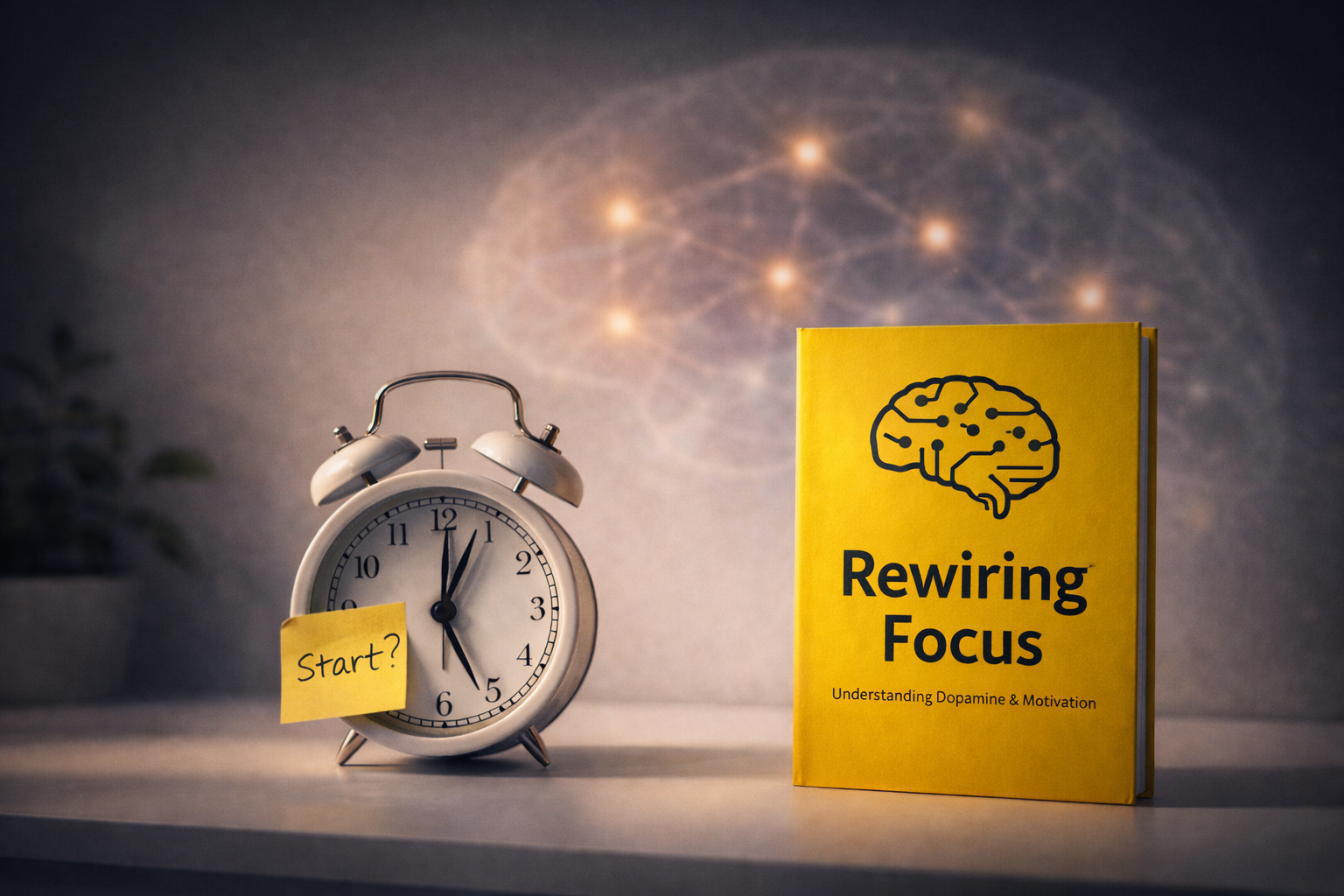
People with ADHD often describe inconsistent motivation, some tasks feel effortless, while others, often more important, feel impossibly heavy. This can trigger harsh self-judgements:
“If I really cared, I’d just start.”
ADHD is a neurodevelopmental condition that affects attention, impulse regulation, and how the brain responds to motivation and reward. Challenges starting a task or transitioning to a new one isn’t about willpower or self-worth. It's about how our brain processes reward and timing. By understanding dopamine’s role in motivation and effort, we can reframe these challenges without blame.
Dopamine: More Than a “Reward Chemical”
Dopamine is often misunderstood as the brain’s “pleasure” signal. In reality, it plays a central role in anticipation, relevance, and motivation, highlighting what seems worth pursuing.
Think of dopamine as the brain’s internal highlighter. When the signal is weak, delayed, or inconsistent, even important tasks can feel disproportionately difficult. Research shows dopamine helps us weigh the effort a task requires against its expected reward.
In ADHD, this signal may be out of sync. Tasks that involve delay, repetition, or abstract goals often fail to “light up,” even when they're personally meaningful.
ADHD and Motivation: A Different Pattern
People with ADHD often express:
“I care, but I can’t start.”
“I thrive in crises, but stall on everyday tasks.”
“Once I start, I can focus, but getting started feels impossible.”
These reflect differences in dopamine signalling, especially when rewards are distant or unclear. The ADHD brain may struggle to generate a strong internal “go” signal, even when motivation and values align.
Research on effort-based decision-making shows our brains are constantly asking:
· “Is this worth the energy?”
Dopamine helps tip the scale toward effort, but in ADHD, that tilt may be harder to achieve.
“Wanting” vs “Liking”: A Helpful Distinction
Neuroscientists differentiate between:
Wanting – the drive to pursue something (dopamine-related)
Liking – the enjoyment during or after the task
In ADHD, these often fall out of sync, a person may want to complete something but feel little reward in doing it, or enjoy it once started but struggle to begin. Understanding this mismatch supports self-compassion. It helps explain why motivation feels unpredictable without equating inconsistency with lack of care.
Why Motivation Feels Unpredictable
Emerging research shows differences in dopamine timing and regulation in ADHD, particularly in response to low-feedback or delayed rewards. This helps explain why:
Interest can spark instant focus
Routine tasks feel unusually effortful
Finishing something may not feel as satisfying as expected
These patterns are neurological, not personal failings, they highlight how context, not just intention, shapes the amount of effort we are able to apply.
When Effort Costs More Than It Appears
Tasks like planning, switching focus, or remembering steps demand more cognitive energy for people with ADHD. When dopamine-driven motivation doesn't sufficiently offset this cost, even small tasks can feel uphill. This experience may be intensified by:
Trauma or chronic stress
Autistic processing differences
Anxiety, low mood, or burnout
In these cases, reduced motivation is about protection rath than a signal for a lack of care. It may signal our nervous system is trying to conserve energy.
What Research Can, and Can’t, Tell Us
Recent studies suggest differences in dopamine function in ADHD, especially in fronto-striatal circuits, affecting how effort and reward are processed in the brain. Key findings include:
Greater responsiveness to immediate, meaningful rewards
Difficulty maintaining drive for long-term outcomes
High variability across individuals
Importantly, brain imaging and behavioural data reveal patterns for people with ADHD, but they’re not able to make predictions. There are key external factors that are also involved; motivation also depends on sleep, stress, relationships, and social context. Dopamine is only one piece of the puzzle.
From Self-Blame to Orientation
Understanding dopamine may not change behaviour overnight, but it can change how we interpret it and build strategies to navigate our way through. Many people report:
Using more compassionate language for effort and focus
Explaining their experience more clearly to others
Reconsidering productivity-based self-worth
Identifying environments that genuinely support momentum
These insights shift focus from moral judgement to informed self-awareness.
“Dopamine Detox” and “Fasting”
Despite popular claims, you can't “detox” from dopamine, it’s essential for our brain functioning. The idea of “dopamine fasting” lacks scientific backing, but stepping back from high-stimulation environments can help reduce our overload. These strategies are about pacing and planning rather than trying to go to extremes.
Observing Your Patterns
When motivation feels unpredictable, curiosity is often more effective than control. Instead of pushing through, try gently noticing the conditions around momentum, effort, and avoidance. These prompts aren’t checklists; they’re invitations to observe your system with more clarity as starting point for building strategies for change.
Cues: When does momentum feel easier?
What time of day do you tend to feel most focused?
What kind of environment supports attention?
Are there particular people or contexts that help?
What usually happens just before you feel stuck?
Payoffs: What are you getting from the task?
Does the activity bring stimulation, relief, pleasure, or calm?
What emotions come up when you think about it, anticipation, dread, shame, pressure?
What do you imagine feeling afterward?
Effort: Where does the task feel heaviest?
Is starting, switching, or finishing most difficult?
Do small wins early on help build momentum?
Would a simple “kick-start” list help reduce decision fatigue?
Friction: What subtly disrupts focus?
Are external notifications (e.g., emails, phones) pulling your attention?
Do short, intentional breaks (e.g., food, movement, stretch) help or hinder re-engagement?
Holding This Information
Understanding how dopamine works for you won’t solve everything, but it can soften self-criticism and offer a new framework for describing effort, focus, and motivation.
In ADHD, motivation is contextual, biological, and relational, not random or lazy. Recognising this can help build environments that support your natural rhythms.
