
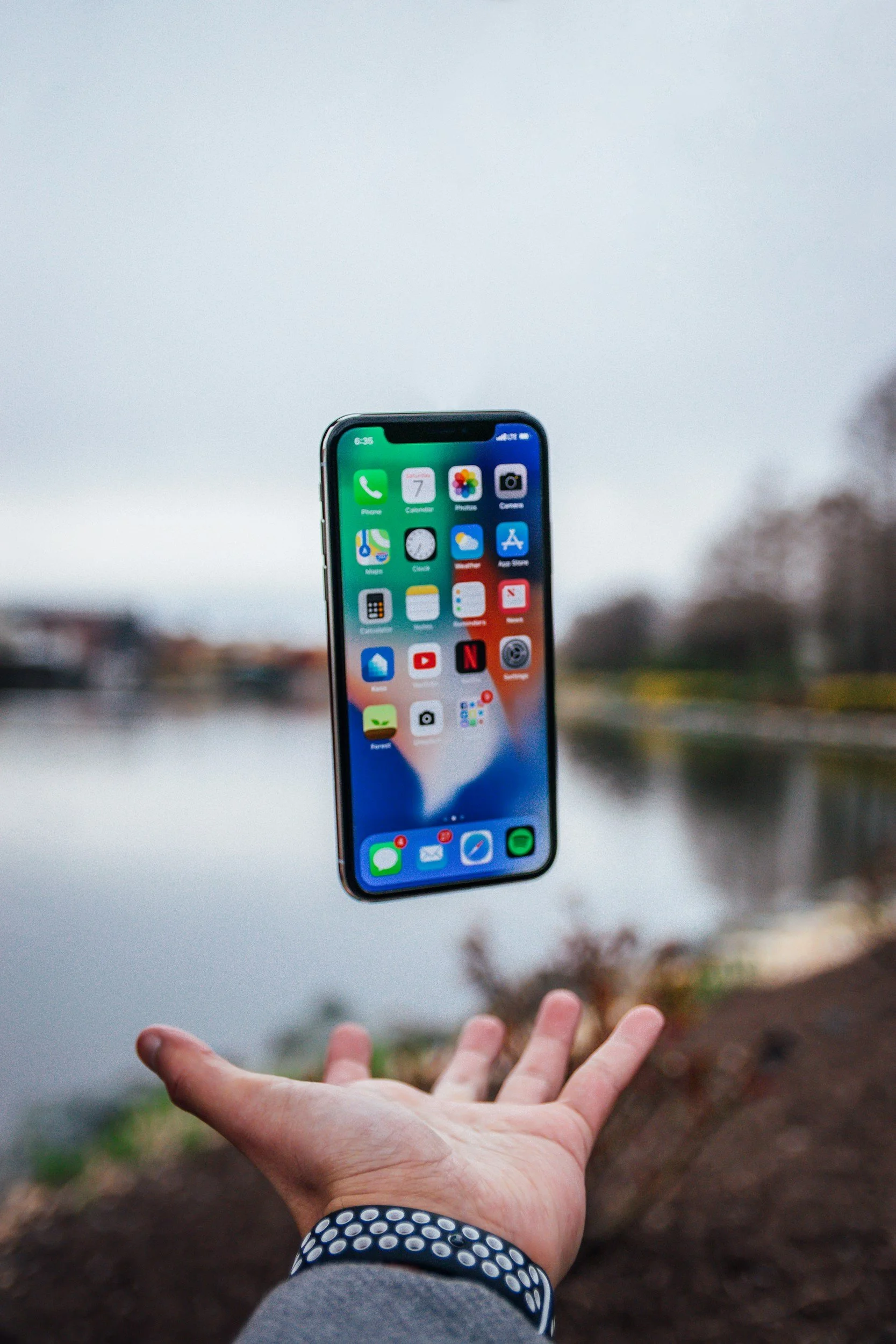
It's 10.30 pm, you pick up your phone to set an alarm for the morning, but by 11.47pm you've read about two international crises, a cost-of-living warning and a frightening health story. You've also seen what a stranger in Queensland thinks about supermarket trolleys. You feel wired and tired at once, and you're a bit worried about the future of civilisation. You still haven't set the alarm.
What is doomscrolling?
Doomscrolling means repeatedly reading negative, threatening or distressing content online, often well past the point where it's useful. It’s not a diagnosis, and reading the news isn't a problem in itself. Checking bushfire warnings during a South Australian summer is sensible, so is keeping up with events that affect family overseas. The issue is how much time we spend on these questions:
Can you stop when you mean to?
Is it doing something useful for you?
How do you feel afterwards?
Is it getting in the way of sleep, work or the people you love?
The illusion of control
When life feels uncertain, checking for updates can feel like doing something useful. We tell ourselves, "If I keep checking, I'll know what's happening," or "Maybe the next update will make things clearer."
Sometimes that's true, we find useful information, make a decision and move on. Often, though, each headline raises a new question, and the brief relief soon turns into fresh worry. The internet can always give us more information, but it rarely gives us more certainty.
So we check again, like a hamster on a wheel with a news subscription. Over time, scrolling becomes less about learning anything and more about easing an uncomfortable feeling. Feeds that never end make it easy to keep going.
We can see similar patterns in anxiety, particularly when uncertainty feels hard to tolerate, that doesn't make doomscrolling a disorder, it's a habit that's tied up with how we feel and how we cope.
What does the research say?
Here's the evidence, without the hype.
The link is real, but we don't know the cause:
Research hs found people who doomscrolled more reported more anxiety and depression, and the link with distress was even stronger. They also reported lower wellbeing and life satisfaction. However, the certainty of this evidence was rated very low, and most studies measured people at one point in time. Doomscrolling may add to distress, distress may lead to more scrolling, or more likely both happen together.
Changing your habits can help:
Other research found that blocking mobile internet on people's phones for two weeks improved their attention, mental health and wellbeing, even when calls and texts still worked. In another trial researchers found that a one-week social media break improved wellbeing and reduced anxiety and depression symptoms.
Phones affect relationships:
"Partner phubbing" means paying attention to your phone instead of your partner. A recent meta-analysis with almost 20,000 participants linked phone use with lower relationship satisfaction and intimacy, and with more conflict.
What the research does not show is if smartphones are "rewiring" or permanently damaging our brains. It also doesn't show how a digital detox treats anxiety or depression. The most useful goal isn't giving up our phone, but getting back a sense of choice over where our attention goes.
When your phone becomes the third wheel
Picture your partner telling you about a hard day while you nod along and scroll through news of the latest global disaster.
"Mmm. That's terrible." "What's terrible?" "Um… everything?"
Relationship researcher John Gottman describes bids for connection: small invitations for attention, like a comment, a sigh or a "you'll never guess what happened." How we respond to these everyday bids matters a lot for closeness over time.
This is where things often go wrong. One partner may scroll to wind down or manage anxiety. The other may see the same behaviour as rejection. Neither person is the villain, because the phone means something different to each of them. Talking about that difference is usually more helpful than arguing about screen time.
Steps to take back the scroll
You don't need more willpower. You need to understand what sets off your scrolling and then set things up so the healthier choice is the easier one.
Run a seven-day attention audit
For one week, jot down notes on any scrolling you didn't plan:
What happened just before you picked up the phone?
How distressed did you feel, from 0 to 10?
What were you hoping to get? Reassurance, distraction, connection or entertainment?
Afterwards, how distressed did you feel?
At the end of the week, find your two most common triggers and choose one to work on. Approach this like a curious scientist rather than a disappointed school principal.
Practise the pause
When you feel the urge to check, name it to yourself: "I'm having the urge to check." Take three slow breaths and notice what the urge feels like in your body.
Then ask: "Where do I actually want my attention for the next ten minutes?"
You might still check your phone, and that's fine. The point isn't to defeat the urge. It's to practise choosing your response instead of reacting on autopilot. Urges are like waves: they rise, peak and pass, especially when you don't feed them.
Install some speed bumps
Automatic habits rely on ease. Add some friction:
Turn off non-essential notifications. Keep emergency and family alerts on.
Move news and social apps off your home screen.
Charge your phone outside the bedroom and use an old-fashioned alarm clock.
Each change creates a small gap between the impulse and the action. That gap is often long enough to ask yourself, "Did I actually mean to open this?"
Write an "if–then" plan
Vague goals like "I'll scroll less" rarely last. Specific plans work better. A meta-analysis by Gollwitzer and Sheeran (2006) found that "if–then" plans make people noticeably more likely to follow through on their goals.
Try plans like these:
"If I get into bed, then my phone stays on the kitchen bench."
"If I open a news app while I'm anxious, then I'll close it and take three breaths first."
Be patient with yourself. One study found new habits took a median of 66 days to become automatic, and the range was very wide (Lally et al., 2010). Slip-ups are part of learning, not proof that you've failed.
Give the news a timetable
Choose one or two set times a day to check the news, such as 8 am and 5 pm. Make sure neither is close to bedtime.
When you want to check outside those times, put it off for ten minutes and notice what happens to the discomfort. Many people find that uncertainty can be uncomfortable without needing them to act on it straight away.
Sadly, the internet will never announce, "Congratulations, you now have enough information. Please go outside." You have to decide that yourself.
Meet the real need
If scrolling is how you cope with loneliness, stress or boredom, taking it away still leaves the feeling there. Instead, find something that meets the same need:
Feeling lonely? Message or call one real person.
Feeling stressed? Take a ten-minute walk or put on a favourite song.
Putting off a task? Start it for just five minutes.
Feeling bored? Do something hands-on, like cooking, gardening or a puzzle.
Not every moment needs to be productive, and rest is valuable too. The aim is simply to have more than one way of coping.
For couples: evicting the third wheel
Talk about what it means, not just how much.
Try: "When you're on your phone while I'm talking, I feel like I don't matter much. Can we work on that together?"
That lands better than "You're always on that thing."
Agree on a few phone-free zones.
Dinner, the first 15 minutes after getting home, or bedtime are good places to start.
Create a signal.
A simple phrase like "Got a minute?" can mean "I need your full attention."
Respect each other's privacy.
Healthy agreements are made together.
Checking or monitoring a partner's phone tends to erode trust rather than build it.
Digital wellbeing isn't digital perfection
A healthier relationship with technology doesn't mean deleting every app or moving to the Adelaide Hills to grow organic zucchini. The aim isn't to use technology less, but more intentionally.
Start with one small experiment, keep what helps and adjust what doesn't. If scrolling is affecting your sleep, mood or relationships, a psychologist can help you explore what's driving it, either one-on-one or together as a couple. In the end, digital wellbeing isn't about beating your phone. It's about making sure the noise doesn't crowd out what matters most.
