
Anger Is a Feeling. Aggression Is a Behaviour.
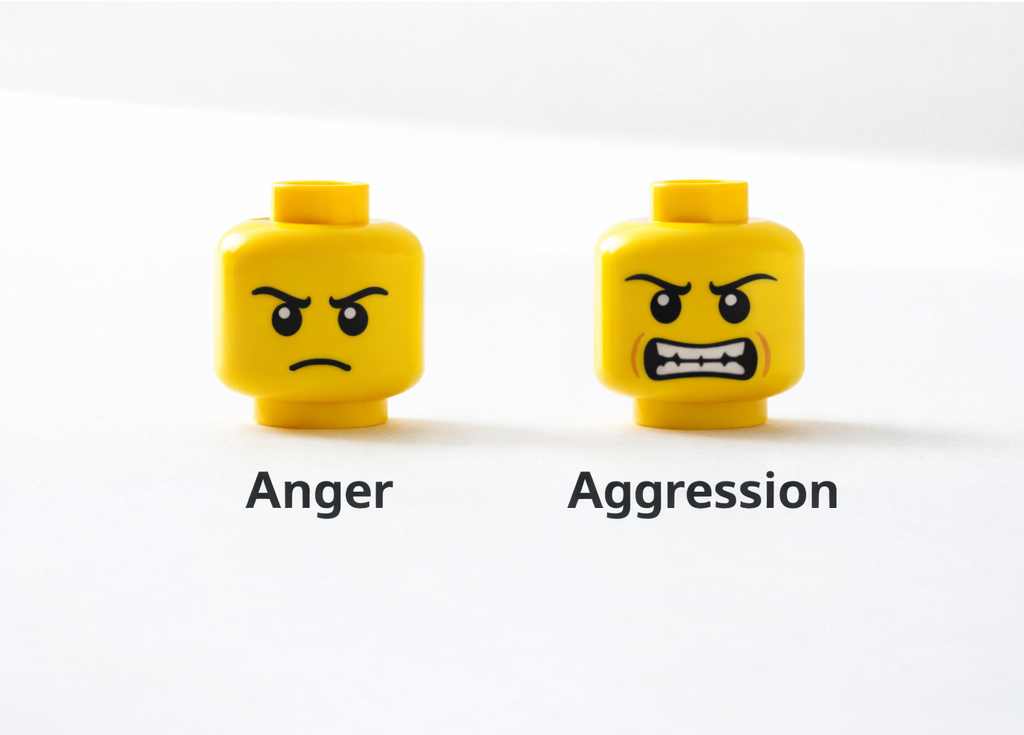
Anger is a natural human emotion, a signal that something matters. Aggression, however, is a behaviour, what we choose to do with that anger. Learn how to tell the difference and turn anger into values-aligned action.
Anger has a reputation problem.
Many of us were taught, directly or indirectly, that anger is “bad,” “dangerous,” or “out of control.” Yet anger is a normal human emotion. It’s part of how our nervous system flags importance: a boundary, a value, a need, an injustice, a threat.
Aggression is different. Aggression is a behaviour, what we do with that surge of anger energy (or sometimes what we do when we’re stressed, threatened, or trying to regain control).
Understanding the difference can reduce shame and increase responsibility at the same time: we can validate the feeling without endorsing harmful actions.
This distinction matters, in relationships, workplaces, parenting, social media, and even in the way we speak to ourselves. It also matters for trauma survivors and neurodivergent people, whose nervous systems may be more easily activated by overwhelm, sensory load, or cues that feel unsafe.
Anger vs Aggression: The Simple Distinction
Anger is an Emotion
Anger is an internal experience, sensations, thoughts, and urges that arise when something feels wrong or unjust.
We might feel anger when:
A boundary is crossed.
A value is violated.
We’re dismissed, disrespected, or excluded.
A goal feels blocked.
We sense danger, physical, emotional, or social.
From a trauma-informed perspective, anger is often protective. It helps mobilise us to respond to threat or injustice. It can bridge the gap between the way things are and the way we want them to be.
Aggression is a Behaviour
Aggression is the action that follows emotion, behaviours intended to harm, intimidate, or control. Aggression can look like:
Yelling or insulting.
Breaking things or blocking someone’s way.
Humiliating or threatening others.
Using silence or withdrawal as punishment.
You can feel angry without being aggressive, and people can act aggressively without feeling angry, for instance, when trying to gain power or control.
“Draft vs Send”
Imagine anger as the draft of an email, fast, emotional, and full of raw energy. Aggression is hitting send. We don’t get to choose when a “draft” appears, but we can choose whether or not to send it. That pause between feeling and action is where responsibility, and freedom, lives.
Why Anger Feels So Instant: Your Body Is Doing Its Job
When anger arises, it’s not just in our mind, it’s in our body. Our brain detects a potential threat (even social threat), and the sympathetic nervous system activates. Heart rate rises, beathing quickens, muscles tense, stress hormones like adrenaline surge to prepare us for action. We might notice:
Heat in our chest or face
A clenched jaw or fists
Narrowed focus or “tunnel vision”
A strong urge to correct, confront, or escape
This response is designed to keep us safe, but when we’re physiologically activated, flexible thinking becomes harder. That’s why “just calm down” rarely works. Instead, the goal is to regulate before reacting.
Anger as Energy, and Information
Anger is energy with direction. It’s our body saying: “Something matters here,” but that energy can be destructive, or constructive depending on what we do with it. Martin Luther King Jr. was angry at racism. Mother Teresa was angry at poverty. Their anger became fuel for justice, not aggression.
When anger aligns with our values, it can lead to courage, advocacy, and social repair. When it conflicts with our values, it can cause harm and regret.
Sometimes, anger isn’t the first emotion we feel, instead it becomes a mask for something more vulnerable, it can cover:
Fear (“I might get hurt.”)
Shame (“I don’t feel good enough.”)
Sadness (“I feel unseen or disconnected.”)
Examples:
A colleague interrupts you and you feel anger, but underneath is embarrassment or feeling overlooked.
A partner forgets something important, anger, covering hurt or disconnection.
A child ignores you, anger, masking worry or helplessness.
For trauma survivors, anger can be a guardian, a fast, protective emotion that steps in when vulnerability feels unsafe. For neurodivergent people, anger can surface from sensory overload or sudden change. We may ask
“What is my anger trying to protect or communicate?”
The Body’s Role in Anger
Physiologically, anger activates our body’s fight-flight system. Here’s what happens inside:
The amygdala detects a threat and signals the body to prepare.
Adrenaline and noradrenaline flood the bloodstream.
The heart pumps faster.
Blood pressure rises.
The prefrontal cortex, responsible for reflection and judgment, briefly goes offline.
This process happens in milliseconds. Awareness can’t prevent it, but it can help us respond more wisely once it occurs.
The Space Between Feeling and Acting
There’s always a small space between the emotion of anger and the behaviour of aggression, even if it’s only a second long. Our aim is to widen that area to create choice. In that gap, you can ask:
“What is this anger telling me?”
“What value or boundary feels threatened?”
“What do I want my behaviour to stand for?”
That moment of reflection is where change begins.
When Anger Becomes Aggression
Anger turns into aggression when:
We act with the intention to harm or control.
We treat others in ways that conflict with our values.
We let our body’s activation dictate our behaviour.
This is part of what makes us human under stress. The goal isn’t to eliminate our anger, but to manage the transition between the feeling and the action. In some parts of therapy, the key is to remember that all emotions are valid, but not all behaviours are effective.
Using Anger Wisely: Turning Energy into Positive Action
Healthy expressions of anger include:
Speaking assertively rather than aggressively.
Setting calm boundaries.
Engaging in community or social change.
Using physical or creative outlets.
We can ask ourselves:
“What kind of person do I want to be in this moment?”
When anger is guided by values, it can build trust and respect rather than destroy it.
How it Shows Up
In relationships: You feel anger during a disagreement. You pause, breathe, and say, “I need a minute.” The anger becomes a cue for self-care rather than conflict.
At work: You notice irritation when interrupted. You name it (“I’m feeling frustrated”) and assert your boundary calmly.
In parenting: Your child refuses to cooperate. You feel tension rising and take a breath before responding, modelling calm limit-setting.
In community: Anger at injustice motivates volunteering, advocacy, or education instead of despair.
In each example, anger highlights what matters, and choice defines the outcome.
Cultural and Neurodivergent Contexts
Our experience of anger is shaped by learning, safety, and culture. Some people grew up in environments where anger was explosive or punished. Others, particularly neurodivergent individuals, may experience sensory overload that heightens emotional arousal. Acknowledging this context allows compassion. Anger expression isn’t “wrong”, it’s an adaptation. The work lies in building flexibility: expressing anger safely, without harm to self or others.
Turning Impulsive Reactions into Thoughtful Responses
You can practise this without therapy (though therapy can deepen it).
Name it.
Labelling emotions reduces their intensity.
“I’m noticing anger.”
“My body is in fight mode.”
Ask what matters.
“What boundary feels crossed?”
“What value is this anger protecting?”
Choose assertiveness.
“When X happens, I feel Y. I need Z.”
This keeps communication clear, not cruel.
Repair, don’t punish yourself.
If you’ve acted aggressively, apologise and recommit to values-based behaviour. Shame fuels reactivity: accountability restores connection.
The Signal and the Steering Wheel
Think of anger as the check engine light on your dashboard. It flashes for a reason. It’s not the breakdown itself, and it’s not the damage. It’s a signal that something needs attention. Aggression, on the other hand, is how we handle the car when that light turns on. We can:
Slam the gas and keep driving harder (lash out).
Pretend we don’t see the light and hope it goes away (suppress).
Or slow down, pull over, and figure out what needs care.
The warning light isn’t the problem, it’s information telling us a boundary may have been crossed, a need may be unmet, or something feels unfair. The goal isn’t to rip the bulb out of the dashboard, but to learn how to read the signal and respond in a way that keeps us, and the people around us, safe.
From Reaction to Intention
If you’ve ever felt ashamed of your anger, you’re not alone. It’s one of the most human emotions there is. It protects, motivates, and reveals what matters.
Aggression is one possible outcome, but it’s not inevitable. When we recognise anger as energy rather than danger, and behaviour as choice rather than destiny, we create space for something powerful: acting in line with our values, even in the heat of emotion.
