
Why Trauma Doesn't Just "Stay in the Past": PTSD, Triggers, and Your Nervous System
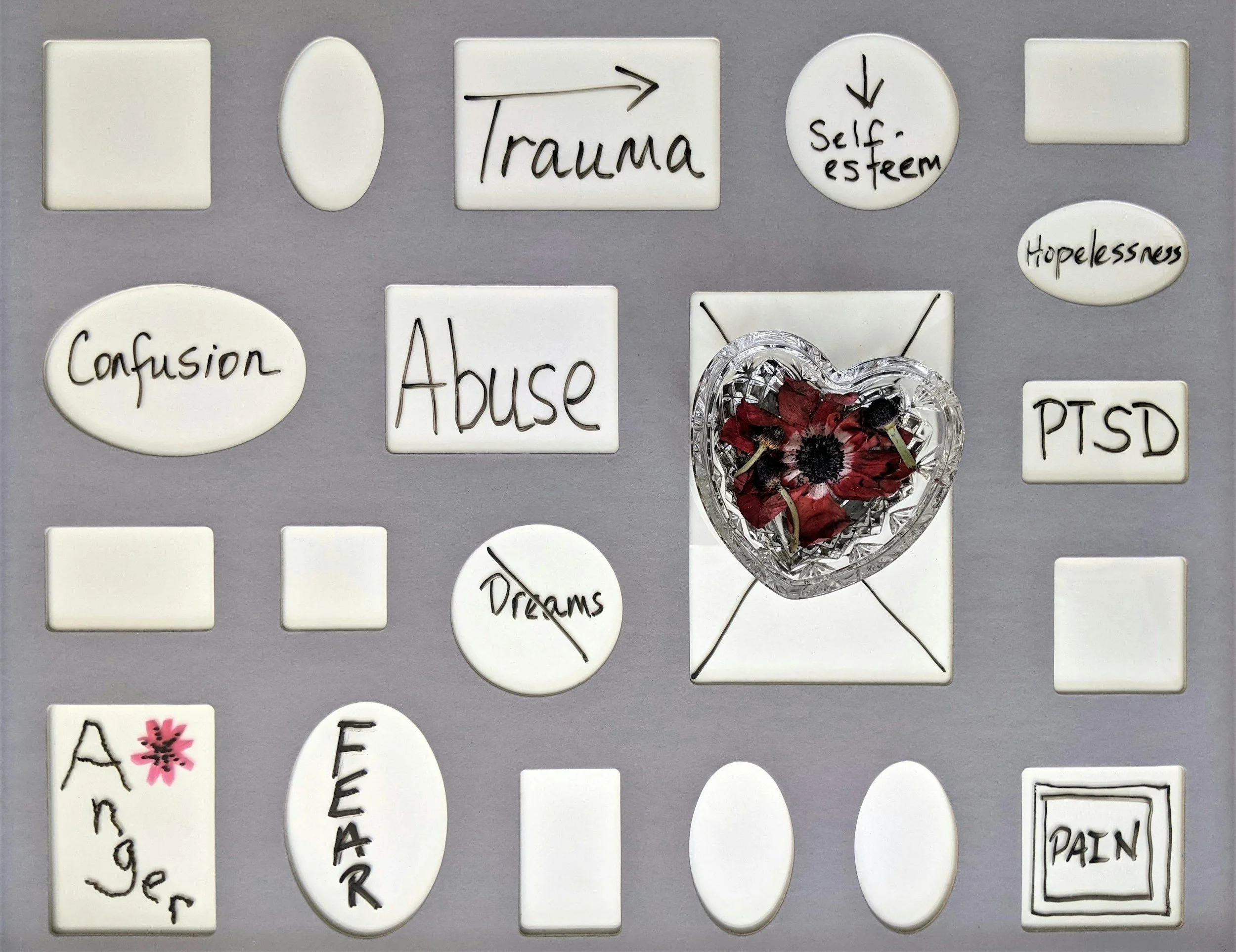
Being a trauma survivor can be like being a time traveller. We can know, with complete certainty, that something happened years ago, and yet our body reacts as though it is happening in the present. A slammed door can send our heart racing, and we are reliving a moment from our past. A particular smell can pull us sideways into panic and responding to a threat that is no longer there. Someone raising their voice can suddenly turn our nervous system into an overworked security guard, scanning every corner for danger even when the threat left decades ago. This isn't being "dramatic," it’s how trauma works, and understanding why it works this way is often the first step toward feeling better and remaining in the present.
What Actually Is PTSD?
Post-traumatic stress disorder (PTSD) is a trauma- and stressor-related condition that can develop following exposure to events involving actual or threatened death, serious injury, sexual violence, or other experiences that overwhelm our capacity to cope.
Despite how often we hear the words in everyday conversation, PTSD is frequently misunderstood. It's not simply "being unable to move on." It's a complex condition that impacts our memory processing, emotion regulation, threat detection, and survival systems. It’s grounded in our neurobiology as a result of essentially learning the wrong lesson from a painful experience.
It’s not about weakness; it’s a signal our brain adapted to survive something overwhelming. The system worked, it just hasn't had the chance to update its files to its new environment yet.
The Outdated Map
Imagine the brain, after trauma, as a navigator working from an old map. The map was drawn during a dangerous time. It marked hazards, unsafe routes, places where things went badly wrong. In its moment, it was an essential tool for survival. The problem is the map hasn't been updated since, and the terrain has changed.
Following this map means routing around roads that have long since been repaired. Marking safe places as dangerous, looking for familiar (or dangerous people) instead of new and safer options. Flagging ordinary situations, noises, particular scents, as hazards requiring immediate action. The system is working; it’s just using information that is no longer relevant.
After trauma, the amygdala, the brain's threat-detection centre, becomes finely tuned to cues associated with the original danger, and trauma memories, rather than being filed neatly into the past, remain vivid and immediate in a way that makes them feel as though they are relevant in the present.
Our prefrontal cortex, which would normally step in and say "actually, let me check the current conditions before we reroute entirely", becomes less effective at moderating the alarm.
Recovery, in many ways, is the process of updating our internal maps with new information about what the territory actually looks like now. There are still hazards, we just need to new detection systems.
The Four Core Symptom Clusters
Re-Experiencing: When the Past Crashes Into the Present
Re-experiencing symptoms involve the trauma forcing itself back into our awareness, uninvited and often without warning. These can include flashbacks, nightmares, intrusive thoughts, emotional distress triggered by reminders (either internal or extern), and physical reactions like a racing heart, sweating, or even feeling sick.
A veteran who hears fireworks and feels momentarily transported back to combat. A car accident survivor who panics at the sound of screeching brakes three suburbs away. Trauma memories behave less like stories you recall and more like a movie set you are transported to, with the smell of the dust in the air and feeling of being like a small child again. It all happens without planning and without your permission. Unfortunately, our brain don’t read the note: "Relax, this was 2018."
Avoidance: The Brain's Short-Term Fix
Avoidance makes perfect emotional sense. If something causes distress, moving away from it is basic instinct. The problem is that persistent avoidance quietly teaches the brain that the world remains dangerous, and that the only way to stay safe is to keep shrinking your life.
Someone who survived a traumatic road accident might stop driving, then stop being a passenger, then find reasons to avoid going out altogether. Life becomes progressively smaller. Avoidance can extend to thoughts, conversations, emotions, places, and people, and it can be surprisingly subtle, showing up to include distraction (overworking, excessive scrolling, substance use), or avoiding connection a kind of pervasive emotional flatness.
The temporary relief avoidance provides is real, but it’s the equivalent of hitting snooze on the alarm rather than investigating what's causing it. The problem doesn't resolve, it just waits and expands.
Negative Changes in Mood and Thinking
Trauma doesn't only affect fear responses. It can fundamentally reshape how someone understands themselves, others, and the world. Many people with PTSD develop deeply painful beliefs: "I'm permanently damaged," "I can't trust anyone," "It was my fault," "Nowhere is safe."
These beliefs are often accompanied by shame, guilt, emotional numbness, or a profound sense of disconnection from life and other people.
Trauma also tends to produce overgeneralisation where we short-cut having to assess situations by grouping things together. "One person hurt me" becomes "people are dangerous." "I lost control once" becomes "I'm never safe." Think of it as the brain's spam filter suddenly flagging every single incoming email as suspicious. Potentially useful in cybersecurity, but less useful for relationships or getting through a Tuesday.
Hyperarousal: Permanently Braced for Impact
Many trauma survivors exist in a constant state of being "on edge", hypervigilant, easily startled, irritable, unable to sleep properly, struggling to concentrate, finding genuine relaxation essentially impossible. Some automatically sit facing exits in restaurants (feeling safest when their backs are against the wall). Others scan rooms out of habit or become highly reactive to unexpected noise.
Our nervous system gets stuck in survival mode, like a car engine that won't come down from high revs even when it’s parked. Trying to work, parent, maintain relationships, or study while your nervous system behaves like an unpaid security intern doing a terrible-but-enthusiastic job is exhausting.
What Does "Being Triggered" Actually Mean?
The word triggered has been somewhat flattened by internet culture. Clinically it refers cues that activate trauma-related distress responses. This connection often occurs quickly and outside of our awareness.
Triggers can include smells, songs, facial expressions, locations, body sensations, tones of voice, anniversary dates, or situations involving powerlessness or loss of control. What follows is not simply remembering, it can feel like the past is happening again, in our body as much as our mind. Triggers are thought of as trauma-related memory and threat systems becoming activated. It’s a learned association between past danger and present cues, associations our brain formed while trying to protect us.
What Actually Helps?
The strongest evidence for treating PTSD continues to support trauma-focused therapies, these include CBT approaches, DBT-Prolonged Exposure, and EMDR all have robust research backing. There is also growing evidence for self-guided supports, particularly for building awareness and skills.
Map the Pattern Before Trying to Fix It
Instead of immediately trying to suppress trauma reactions, we can begin noticing:
What triggered my response?
What happened in my body?
What thoughts appeared?
What urges followed?
This process helps us understand the “weather patterns” of our nervous system. Awareness creates opportunities for change.
Help the Brain Update the Map
Trauma collapses time. A present-day reminder suddenly carries the emotional weight of a past experience. Questions can ground us in the present:
Where am I right now?
What year is it?
Who is with me?
What is different about this situation compared to the past?
Some people benefit from reminders like:
· “This is a reminder of danger, not the original danger itself.”
The goal is not to force feelings away, but to help our nervous system recognize the present moment is different from the traumatic past.
Rebuild Safety in Small Steps
While avoidance of trauma shrinks life, recovery means taking steps to expand it again. Rather than overwhelming our nervous system, healing usually happens through manageable experiences of:
“I did this.”
“I survived this.”
“I was okay.”
This might involve:
Making one phone call
Driving short distances
Attending therapy
Sleeping without distractions
Reconnecting socially
Small experiences of safety repeated consistently can slowly retrain the nervous system.
Create Space Before the Emergency Response
Trauma reactions are not always fear-based, sometimes they appear as:
Anger
Shame
Emotional shutdown
Urges for immediate relief
It can be helpful to learn to pause before reacting. To create space we can ask:
· “Is this danger current, or remembered?”
The pause may feel small, but over time it teaches our nervous system that not every alarm requires an emergency response.
Borrowed Steadiness
Healing from trauma is seldom a solo process. Feeling emotionally safe with another person can help regulate our nervous system in powerful ways. Support is not weakness, for many trauma survivors, it is the beginning of rebuilding safety.
What Recovery Actually Looks Like
Healing from trauma doesn’t mean never feeling triggered again, it’s more like:
Noticing activation earlier
Recovering more quickly
Reducing avoidance
Expanding life again
Building flexibility and safety
With the right support, understanding, and treatment, our nervous system can learn that survival is no longer the only goal. Safety, connection, calm, and meaning can become possible again.
