
Managing Distress During Holiday Closure

The holiday season can be a time of warmth, connection, and reflection, but also full of unpredictability and change. Routines slip out of place, support systems go quiet, and even the fun plans can feel overwhelming. This time of year often shakes the structures that usually hold us up, and it can leave many of us feeling like we’re barely staying above water.
Without a plan, navigating this season can feel like driving without a map. We might still reach our destination, but we can risk taking wrong turns and feeling lost along the way. Planning ahead gives our nervous system a sense of safety, it helps us know what to expect and where to go when emotions run high.
It’s also important to remember that therapy doesn’t end when our session do. Like learning an instrument, the real progress happens in between lessons, through practice. The strategies we use every day aren’t “homework”; they’re where we really get a chance to grow.
Practising distress tolerance or grounding tools now strengthens the skills we rely on, building our ability to respond with more choice rather than reactivity to life’s shifts during the holidays and long after they pass.
Holiday Closure Dates
Lots of services will be closed over the coming weeks and it’s a good idea to check what is open and available. As an example, Emma T Psychology will be closed for a short period over Christmas and New Year while our team rests and prepares for 2026:
Closed: Monday, 22 December 2025 – Friday, 2 January 2026
Reopening: Monday, 5 January 2026 at 8:00 AM ACDT
During this time, our team will be resting and preparing for the year ahead. We’ll respond to all messages when we reopen. In the meantime, this guide offers evidence-based distress-tolerance and grounding tools you can use to maintain emotional steadiness and safety.
Why the Holidays Can Feel So Intense
Australian summers bring sunshine, gatherings, and sensory overload. They also bring disrupted sleep, travel, financial pressure, and social expectations. Even if we’re not consciously stressed, our body can register these changes as instability. From a neurobiological perspective, when predictability decreases, our amygdala (the brain’s alarm centre) activates, looking for danger. The prefrontal cortex, responsible for reasoning and problem-solving, temporarily becomes less active.
Research shows that grounding, mindfulness, and distress-tolerance skills help our nervous system rebalance more quickly and understanding this mechanism can also be powerful in shifting self-criticism (“What’s wrong with me?”) to self-awareness (“My body is reacting to change, and I can help it settle.”).
What Is Distress Tolerance, and Why It Matters
Distress tolerance is about helping the body calm down when emotions feel too intense to manage with logic alone. It’s not about analysing or challenging thoughts, it’s about giving your nervous system a chance to reset so that clear thinking becomes possible again.
When distress is high, the brain’s prefrontal cortex, the part responsible for reasoning and problem-solving, temporarily goes offline. The amygdala, which manages the body’s alarm system, takes over. In these moments, trying to “think your way out of it” can feel impossible or even increase frustration.
That’s where distress-tolerance strategies come in. They use physical and sensory techniques to help the body stabilise first. Once the body begins to settle, the mind naturally follows. We might use distress-tolerance techniques when:
Crowds, noise, or family interactions feel overwhelming
We notice racing thoughts or physical agitation
We feel on the edge of tears, anger, or shutdown
We experience urges to withdraw or react impulsively
These skills focus on soothing the nervous system, through grounding, temperature change, breath, movement, or sensory awareness, so that emotional intensity can pass without escalation.
Over time, practising these micro-resets builds resilience, emotional flexibility, and confidence in our ability to cope with future challenges. Distress tolerance doesn’t mean ignoring our emotions; it means regulating the body first, so the mind can safely rejoin the conversation.
A Toolkit for the Holiday Season
Think of distress tolerance as being like releasing steam from a pressure valve, it keeps our system safe until things cool down.
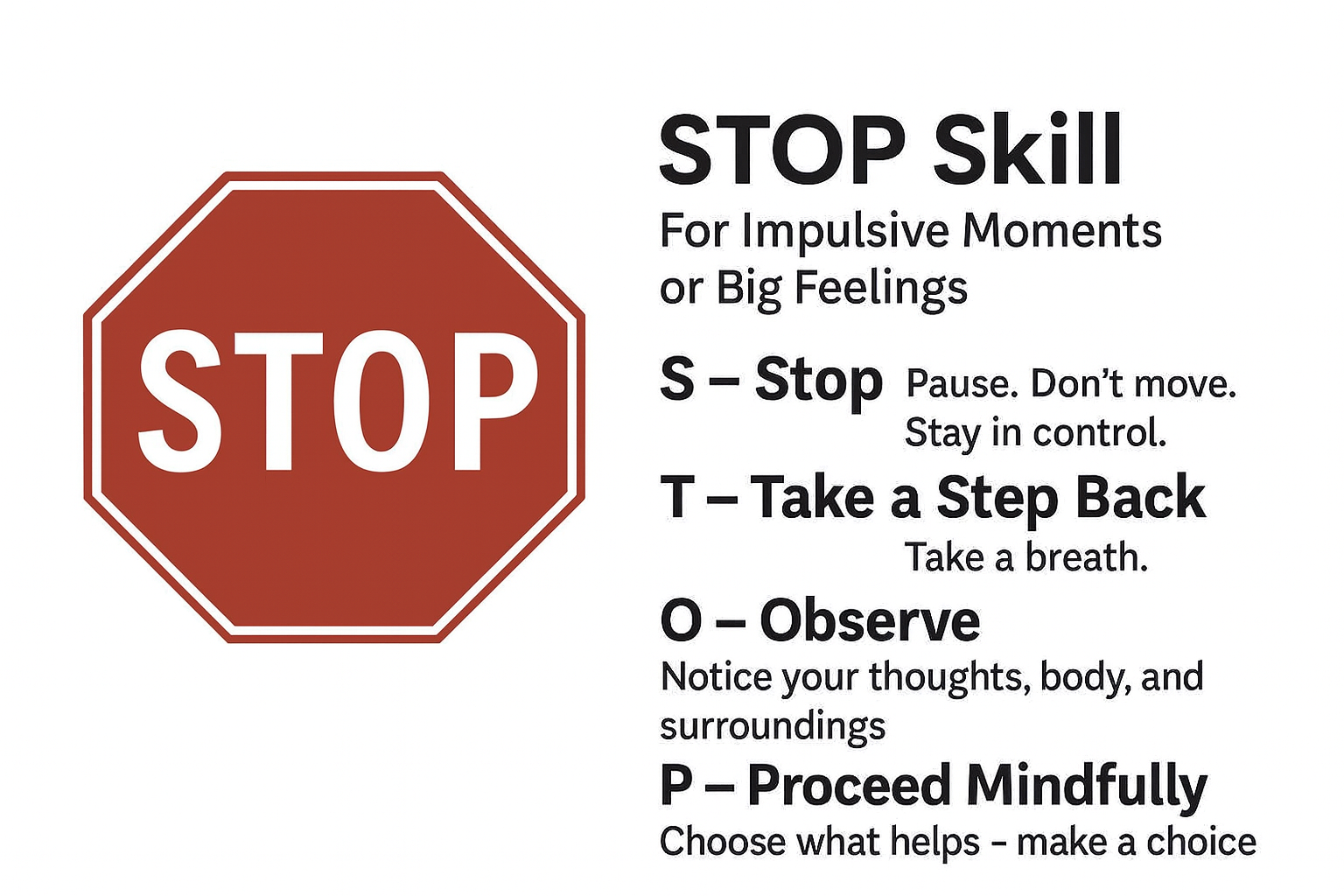
The STOP Skill
Being able to take a moment to interrupt our impulsive reactions and bring the prefrontal cortex back online, allows us to make values-based responses instead of reflexive ones.
S – Stop: Pause before reacting.
T – Take a step back: Breathe; change posture or room.
O – Observe: Notice sensations and thoughts.
P – Proceed mindfully: Ask, “What will support me right now?”
Ride the Wave
Emotions are like waves, they rise, crest, and fall. We can’t stop the ocean, but we can learn to float.
Inhale for 4, exhale for 6.
Run cool water on your hands or face.
Say: “This will pass. I can handle this.”
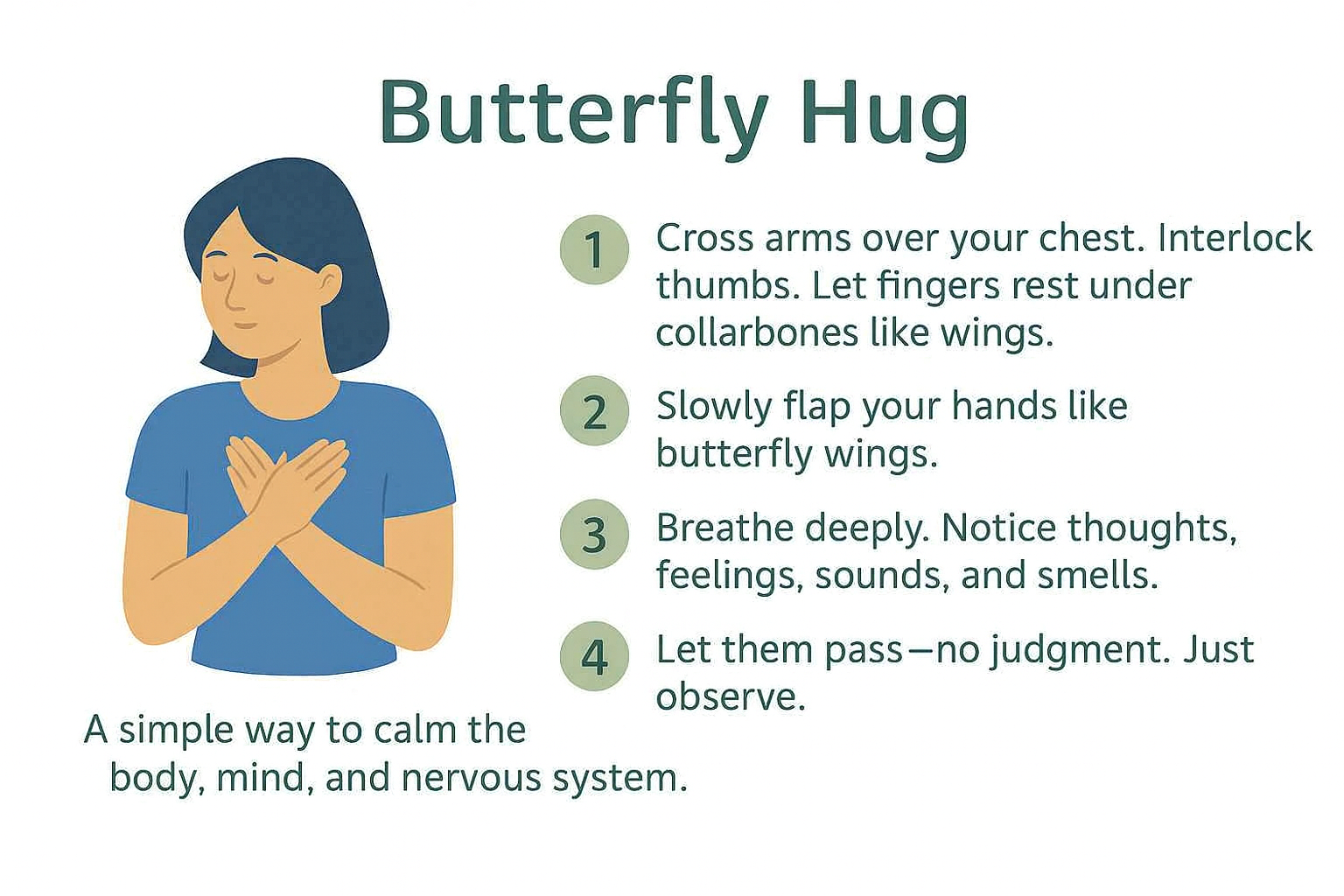
The Butterfly Hug: Gentle Self-Regulation
A simple EMDR-informed method for calming your nervous system:
Cross your arms over your chest, placing your fingertips just under your collarbones.
Tap slowly, left, right, left, like gentle wings.
Keep your breathing low and steady.
This bilateral motion helps your brain reorient and ease emotional intensity.
Grounding Techniques: Reset Like a Phone
Grounding uses sensory feedback to bring our mind back to the present moment, reducing dissociation and anxiety. It’s the nervous system’s “reboot.”
Naming 5 things you see, 4 you feel, 3 you hear, 2 you smell, and 1 you appreciate.
Wiggle your toes in shoes, push your feet into the ground and notice how it pushes back against you.
Use scent, taste, or touch (e.g., peppermint gum, soft fabric, cool water).
Think of grounding as pressing the “restart” button when your internal dashboard is flashing red.
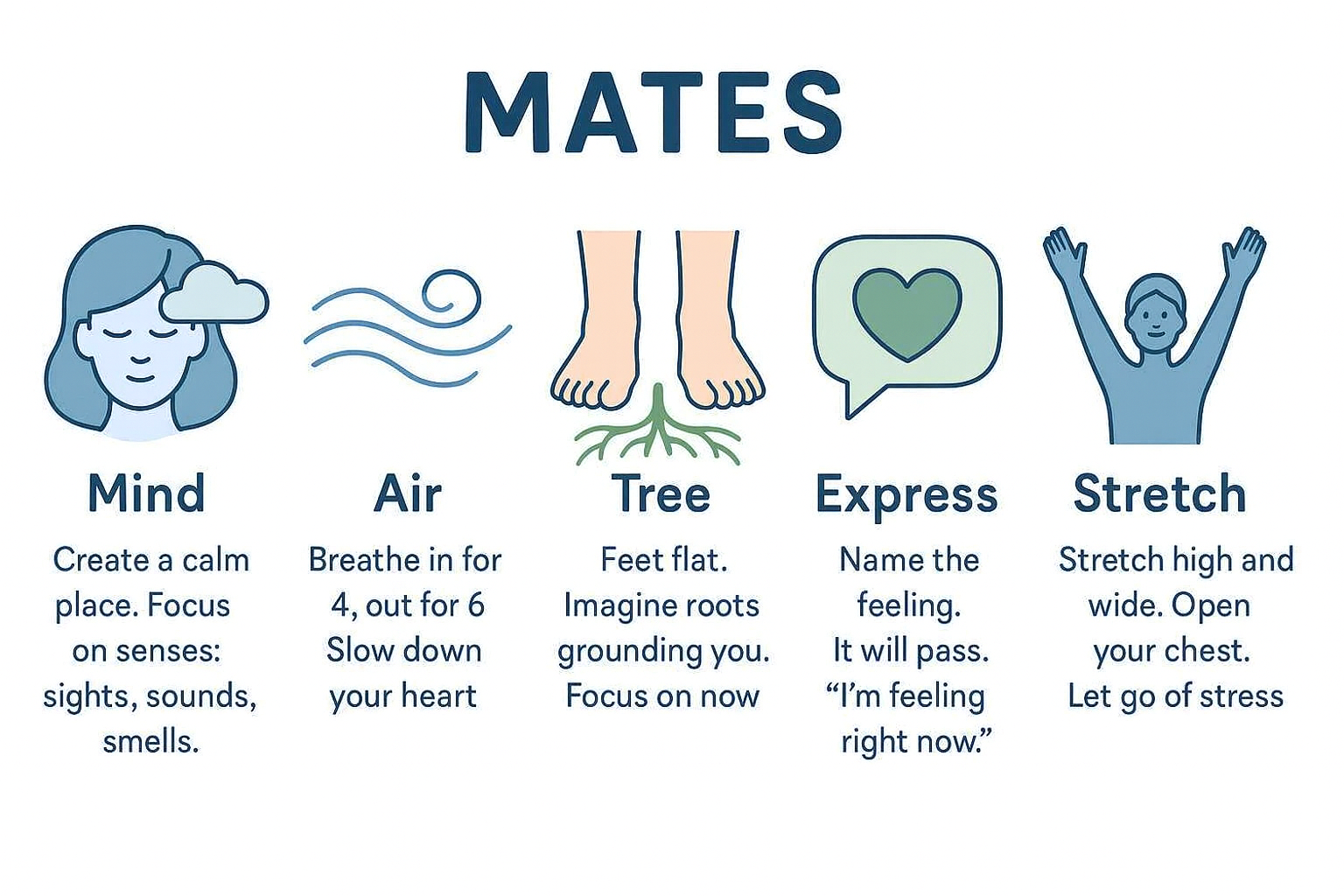
MATES Method
Uses multiple sensory systems at once, reinforcing body–mind connection and felt safety.
Mind: Visualise a calm place.
Air: Slow, even breaths (in for 4, out for 6).
Tree: Plant your feet and imagine roots grounding you.
Express: Name what you feel without judgement.
Stretch: Move gently to release tension.Make it stand out
Tiny Mindfulness Moments
As Ellen Forney writes, “The days when we feel like we don’t have time to meditate are the moments when we need to do it the most.” This is incidental mindfulness, turning small pauses (waiting for the kettle, traffic lights, or an email to load) into moments of grounding.Turning ordinary “wait time” into small opportunities to reset our nervous system. When life feels busiest, these micro-pauses help the body remember how to slow down.
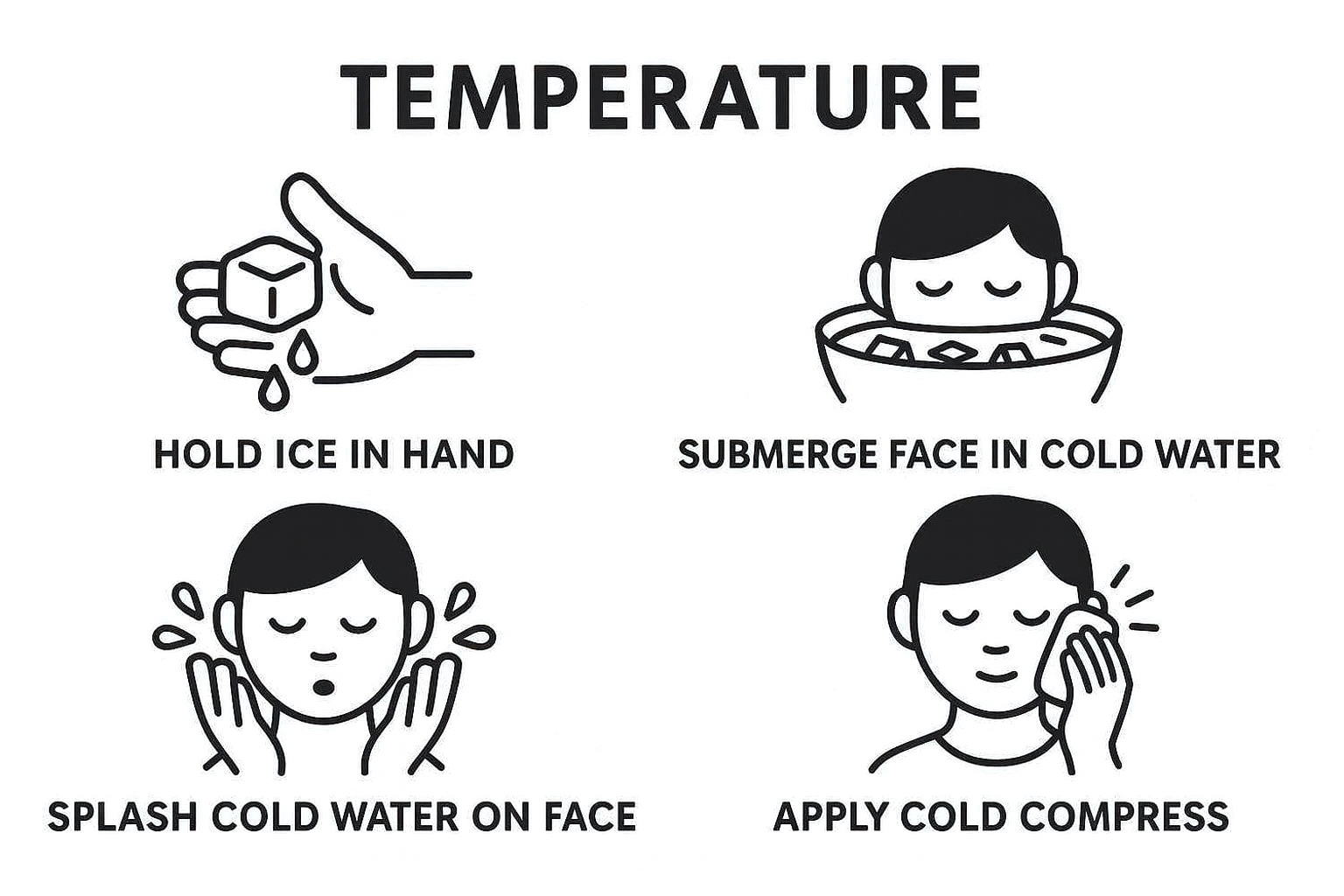
Cool Down the System (TIPP Technique)
When distress hits 9/10, focusing on our physiology can shift the body from “fight/flight” to “rest/digest” by stimulating the vagus nerve allowing clear thinking to return.
Temperature: Cool water on your wrists or face.
Intense movement: Short burst of physical activity.
Paced breathing: Longer exhale than inhale.
Progressive relaxation: Tense and release muscles.Make it stand out
Do a “body scan”, what are you feeling in this moment?
Where do you notice any moments of tension in your body?
Embrace the pause and enjoy the moment.
Even 30 seconds of mindful awareness can lower arousal and restore mental clarity. These micro-moments are where emotional regulation becomes a daily habit.
Building Your Coping Plan
Before the holidays, make a quick list of:
Triggers: crowds, fatigue, noise
Tools: music, sensory kit, quiet space
Supports: friends, helplines, pets
Download our Coping Plan, or create a list of your own strategies that work and keep them nearby.
When to Reach Out for Extra Support
If distress feels unmanageable or unsafe:
Lifeline: 13 11 14
Mental Health Triage (SA): 13 14 65
LETSS (5:00 pm–11:30 pm): 1800 013 755
QLife (LGBTQIA+): 1800 184 527
LETSS (SA): 1800 013 755
Emergency: 000
How to Support Others
You aren’t responsible for “fixing” anyone else, but if you want to help, sometimes what they need is the same as you:
Listen without rushing to advice
Validate without judgement: “That sounds really hard”
Offer choice: “Would you like company or space?”
Connection, not correction, protects wellbeing.
You’re Still Doing the Work
Every time you pause, breathe, or ride the wave, you’re strengthening your nervous system’s resilience. Self-care during a break is sometimes the most important time to work on your mental health.
We look forward to reconnecting from Monday 5 January 2026 at 8:00 AM ACDT.
Taking care of yourself is the most important way to grow.
